28 May 2026
Google's Trillium and the AI Hypercomputer: Evaluating Google's 8th-Gen TPU Architecture
 Reviewed byAzjargal Gankhuyag· AI Agent Engineer | Solution Architect
A strategic breakdown of Google's 8th-gen TPU (Trillium) and AI Hypercomputer. Understand trade-offs, constraints, and when to shift from GPUs to TPU architectures.

For years, scaling artificial intelligence workloads meant scaling NVIDIA GPU clusters. But as parameter counts explode and power grids strain under the compute density required for modern models, relying on a single hardware ecosystem creates supply chain risks, cost bottlenecks, and architectural constraints. Enter Google's latest custom silicon and system design.
This article covers Trillium; representing the 8th generation of Google's Tensor Processing Unit (TPU) architecture and the broader system it powers, known as the AI Hypercomputer.
For CTOs, founders, and senior engineering leads, this topic directly impacts your unit economics for AI scaling. The decision to adopt TPUs over traditional GPUs affects framework lock-in, infrastructure strategy, and the speed of reliable delivery for massive model training. By the end of this piece, you will understand the mechanics of the AI Hypercomputer, the trade-offs of migrating away from CUDA, and the concrete criteria to evaluate whether Trillium is the right fit for your specific workloads.
Core Mechanics: What Changes with Trillium
The AI Hypercomputer is not a single server or a standalone chip. It is a system-level architecture that co-designs the hardware (compute, memory, networking) and open software frameworks to optimize performance across large-scale clusters.
The Trillium Silicon

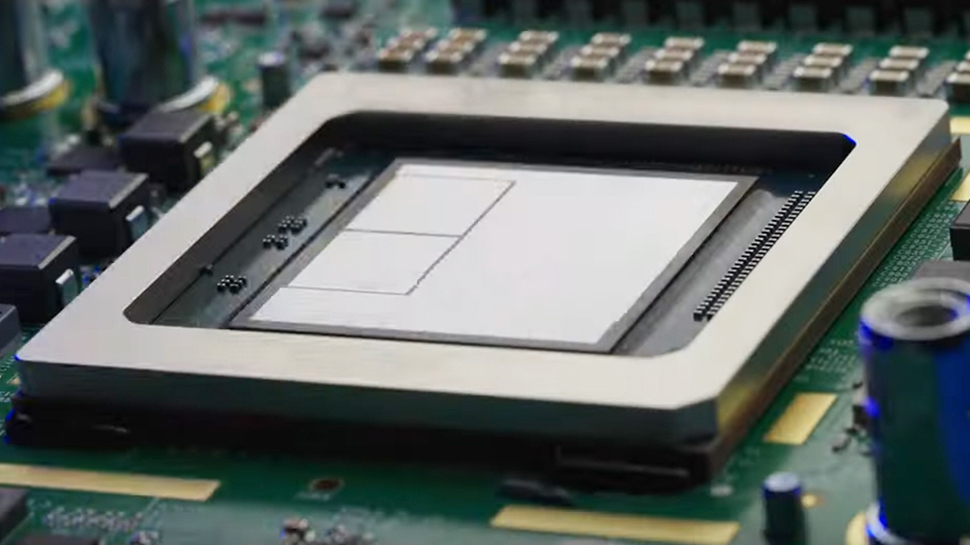
Trillium introduces significant leaps in hardware capabilities compared to its predecessor, the TPU v5e:
- Raw compute power: Trillium delivers a 4.7x increase in peak compute performance.
- Memory bandwidth: It doubles both the High Bandwidth Memory (HBM) capacity and bandwidth, addressing the memory-bound constraints typical in Large Language Model (LLM) serving.
- Energy efficiency: It achieves a 67% improvement in energy efficiency, translating to lower operational costs per token or per training run.
- SparseCore: Trillium includes a third-generation SparseCore, a specialized accelerator designed explicitly to process ultra-large embeddings found in deep learning recommendation models.
The System: Networking and Storage
A single fast chip is useless if it spends most of its time waiting for data. The AI Hypercomputer solves cluster-level bottlenecks using Google's Jupiter network and optical circuit switches (OCS). Traditional clusters rely on electrical switches, which require complex cabling and are vulnerable to localized hardware failures. OCS dynamically reconfigures the network topology using mirrors. If a TPU pod fails, the optical switch simply reroutes the data flow around it in milliseconds. This results in measured improvement in cluster uptime and allows workloads to scale up to tens of thousands of chips without severe latency degradation.
Storage is handled via tight integration with Cloud Storage and parallel file systems designed to feed data to the TPUs fast enough to keep the matrix multiplication units fully saturated.
Operating Models and Architectures
When adopting the AI Hypercomputer, your architecture shifts from managing individual nodes to programming the entire cluster as a single computer. This requires specific operating models and software patterns.
The Software Bridge: OpenXLA
The biggest shift when moving from NVIDIA to Google TPUs is the software compiler. NVIDIA relies on CUDA, a proprietary parallel computing platform. Google TPUs rely on XLA (Accelerated Linear Algebra).
Instead of writing custom kernels for the hardware, engineers write models in standard frameworks like JAX or PyTorch. The code is then passed to the OpenXLA compiler, which analyzes the mathematical operations and optimizes them for the TPU pod's specific network topology. It fuses operations, manages memory allocation, and orchestrates communication between chips.
Parallelism Strategies
Trillium is built to handle massive models that cannot fit on a single chip. You will need to implement specific parallel execution strategies:
- Data Parallelism: The model is replicated across multiple TPUs, and data is split. Best for smaller models or fine-tuning.
- Tensor Parallelism: Individual math operations (like matrix multiplications) are split across multiple chips in the same pod. Trillium's high-speed interconnects make this highly efficient.
- Pipeline Parallelism: Layers of a large model are distributed across different chips. Data flows sequentially through the network.
The AI Hypercomputer simplifies this through software frameworks that automate the distribution of these parallel strategies across the optical network.
High-Value Use Cases
Trillium and the AI Hypercomputer are not general-purpose compute environments. They are highly specialized. They offer the highest ROI in specific scenarios:
Large-Scale Model Pre-training and Fine-tuning
If you are training foundational models or heavily fine-tuning open-weight models (like Llama 3 or Gemma) on proprietary datasets, Trillium provides immense scale. The synchronous nature of TPU pods and the reliable delivery of the OCS network mean fewer interrupted training runs due to hardware failure.
High-Throughput LLM Serving
For consumer-facing AI agents or workflow automation tools that process massive volumes of text, memory bandwidth is the primary bottleneck. Trillium's doubled HBM capacity allows for larger batch sizes during inference, significantly lowering the cost per generated token compared to older TPU generations.
Deep Learning Recommendation Models (DLRMs)
Ad tech, e-commerce, and streaming platforms rely on recommendation engines that use massive embedding tables. Traditional GPUs struggle with these because they are memory-bound and sparse. Trillium's SparseCore is explicitly designed to handle sparse matrix operations, making it uniquely suited for large-scale ranking and recommendation workloads.
Trade-offs, Risks, and Constraints
Adopting Trillium is a strategic commitment. It is crucial to validate these constraints in your own environment before migrating.
1. Cloud Provider Lock-in
TPUs are proprietary to Google Cloud. Unlike NVIDIA GPUs, which you can run on AWS, Azure, GCP, or in your own on-premise data center, building infrastructure heavily optimized for TPUs means committing to the GCP ecosystem. If multi-cloud portability is a strict regulatory or business requirement, heavily coupling your custom software to TPU-specific optimizations introduces risk.
2. The CUDA Chasm
The AI ecosystem was built on NVIDIA's CUDA. While PyTorch/XLA and JAX have matured rapidly, many open-source repositories, specialized libraries (like FlashAttention), and edge-case models are heavily optimized for CUDA. Migrating a complex, custom GPU codebase to run efficiently on TPUs requires refactoring. You are trading hardware lock-in (NVIDIA) for compiler dependency (XLA).
3. Compilation Overhead
XLA operates by compiling the entire computational graph before execution. This is excellent for long-running training jobs or steady-state inference because the execution is incredibly fast. However, it makes dynamic workloads—where the shape of the data or the model changes frequently—highly inefficient. Every change triggers a recompilation, which stalls compute.
Concrete Decision Criteria: Trillium vs. Standard GPU Clusters
When evaluating a solution design for a new AI initiative, use the following criteria to structure your decision:
Workload Portability
- GPU Cluster: High portability across cloud providers and on-prem environments.
- Trillium: Locked to Google Cloud, though code written in PyTorch/JAX remains portable.
Cost-to-Performance Ratio
- GPU Cluster: Variable. Often incurs premium pricing due to hardware scarcity and high power consumption.
- Trillium: Generally offers a lower cost-per-FLOP, especially when utilizing Google's Dynamic Workload Scheduler for flexible capacity.
Software Maturity
- GPU Cluster: Industry standard. Near 100% compatibility with open-source AI tools and custom CUDA kernels.
- Trillium: Excellent for standard JAX and PyTorch architectures. Requires validation for niche frameworks or models heavily reliant on custom CUDA operations.
Failure Tolerance at Scale
- GPU Cluster: InfiniBand networks are fast but can suffer from localized switch failures affecting the entire cluster.
- Trillium: Optical circuit switches provide near-instant rerouting, improving continuous improvement of training uptime for multi-week runs.
Common Pitfalls and How Serious Teams Avoid Them
Transitioning to the AI Hypercomputer requires a mindset shift. Teams that fail to adapt often hit performance walls.
Lift-and-Shift of CUDA Code
The most common pitfall is attempting to run PyTorch code written explicitly for GPUs directly on TPUs without auditing the operations. If your code forces dynamic control flows (like `if` statements inside the training loop that depend on tensor values), XLA will struggle to compile the graph, resulting in terrible performance.
How to avoid: Profile your code using tools like the Google Cloud TPU TensorBoard plugin. Rewrite dynamic loops into static shapes and utilize JAX or PyTorch/XLA best practices.
CPU Bottlenecks in the Data Pipeline
Trillium processes data incredibly fast. If your data preprocessing (handled by CPUs) cannot keep up, your expensive TPUs will sit idle waiting for batches. How to avoid: Implement clear ownership of the data pipeline. Use optimized data loaders (like `tf.data` or PyTorch's native fast loaders) and pre-fetch data directly into TPU memory. Ensure the CPU-to-TPU ratio in your cluster configuration matches your preprocessing needs.
Ignoring the Dynamic Workload Scheduler
Provisioning reserved TPUs and leaving them idle during off-peak hours destroys the unit economics of AI.
How to avoid: Leverage the Dynamic Workload Scheduler. It allows teams to submit jobs that queue and run when capacity becomes available, often at a significantly reduced cost. This is ideal for batch inference or offline fine-tuning where immediate execution is not strictly required.
Takeaways
- It is a system, not just a chip: Trillium and the AI Hypercomputer represent a tightly integrated stack of silicon, optical networking, and software compilers designed to scale AI workloads efficiently.
- Focus on the compiler: The success of your practical implementation depends less on raw hardware specs and more on how well your team adapts to JAX, PyTorch/XLA, and static graph compilation.
- Economics favor scale: Trillium provides significant advantages in energy efficiency and compute per dollar, but these benefits are best realized in continuous, large-scale training, massive batch inference, or deep recommendation engines.
- Data pipelines dictate performance: The 4.7x compute increase is only valuable if your storage and CPU preprocessing pipelines can feed the TPUs fast enough. Design the end-to-end data flow before provisioning the cluster.
- Acknowledge the trade-offs: You are trading NVIDIA ecosystem dominance for Google's integrated infrastructure. Validate your framework dependencies and cloud strategy before committing to a TPU-centric architecture.
Join the newsletter
Enjoyed this article? Get more like it in your inbox every week.
* 200+ tech professionals already in.
Next read
28 Jul 2026
5 Architectural Strategies to Unlock AI’s Full Potential
Move beyond prototype LLMs. Discover five architectural strategies to build reliable, grounded, and measurable AI systems that deliver real business value for the enterprise.
20 Jul 2026
Engineering an Agentic Workforce: Using Google Workspace
Examine how enterprises use Google Workspace and Vertex AI to shift from basic generative chat to secure, multi-step agentic workflows that drive measurable improvement.
13 Jul 2026
Responsible and Explainable AI: A Practical Guide for Engineering Leaders
Move beyond compliance. Learn how to architect AI systems that balance model performance with transparency, safety, and operational governance for reliable delivery.