13 Jul 2026
Responsible and Explainable AI: A Practical Guide for Engineering Leaders
 Reviewed byAzjargal Gankhuyag· AI Agent Engineer | Solution Architect
Move beyond compliance. Learn how to architect AI systems that balance model performance with transparency, safety, and operational governance for reliable delivery.
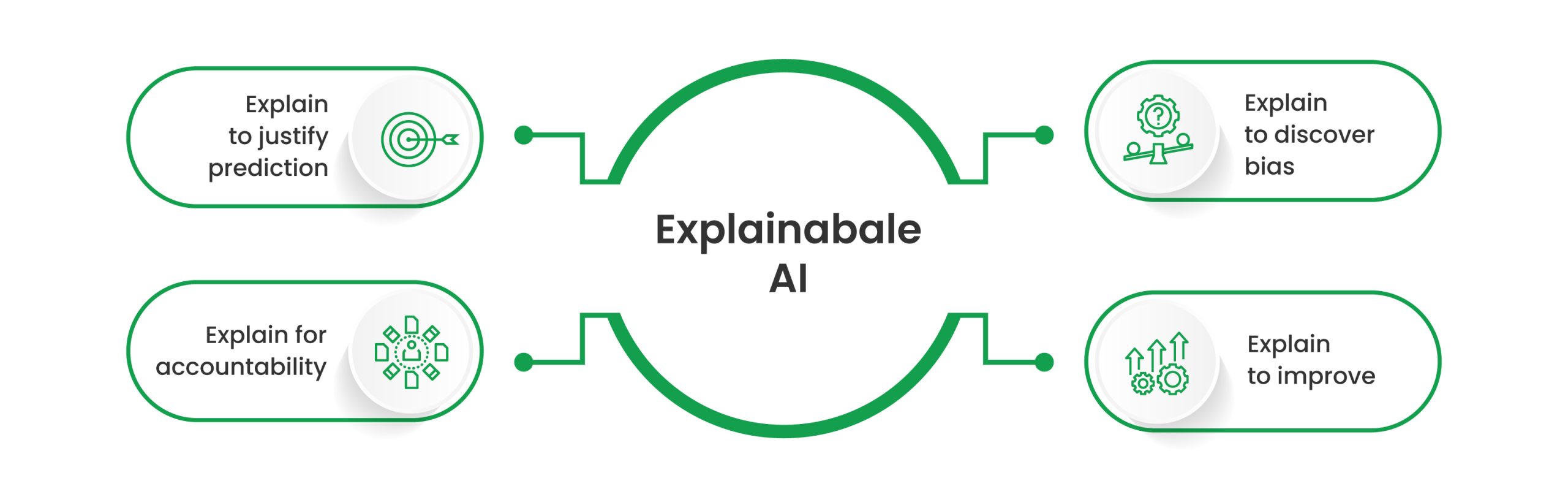
As artificial intelligence moves from isolated prototypes into core operational workflows, engineering leadership faces a persistent friction point: modern models are highly capable, but inherently opaque. You cannot deploy an AI agent or an automated workflow into a high-stakes environment if you cannot explain why it made a specific decision, or guarantee it will operate within safe, predictable bounds.
This is the domain of Responsible AI (RAI) and Explainable AI (XAI).
For engineering and product leaders, treating these concepts purely as legal compliance or ethical philosophy is a mistake. Responsible AI is the overarching operational framework—the policies, testing standards, and governance loops that ensure systems are fair, safe, and accountable. Explainable AI provides the technical mechanisms used to achieve that transparency.
Building responsible systems directly impacts solution design. It dictates your infrastructure choices, latency budgets, and telemetry pipelines. In this guide, we will break down the core mechanics of explainability, explore architectural patterns for safe deployment, and outline the trade-offs you must navigate to ensure reliable delivery and measured improvement.
How Explainability Works in Practice
Explainability is not a single feature you toggle on; it is a spectrum of techniques adapted to the type of model you are deploying. To evaluate the right approach, you must understand the underlying mechanics.

1. Inherently Interpretable Models
Before reaching for complex neural networks, the baseline approach is to use models that are naturally transparent. Decision trees, linear regression, and logistic regression provide a clear mathematical path from input to output. You can look at the model weights or branch logic and know exactly why a decision was made. If your problem can be solved with a linear model without a massive drop in accuracy, this is often the most practical implementation.
2. Post-Hoc Explainability for Black-Box Models
When tabular or predictive workflows require the high accuracy of gradient boosted trees (like XGBoost) or deep neural networks, the model becomes a "black box." To understand these models, engineers use post-hoc explainability methods—tooling applied after the model is trained to reverse-engineer its logic.
- Feature Attribution: Techniques like SHAP (SHapley Additive exPlanations) and LIME calculate the exact contribution of each input variable to the final prediction. For example, SHAP can tell you that a loan was denied primarily because of a low credit history, pushing the prediction down by 15%, while income pushed it up by 5%.
- Counterfactual Explanations: This method generates hypothetical scenarios. It tells the user what the minimum necessary change to the input would be to flip the model's decision (e.g., "If the account balance had been $500 higher, the transaction would not have been flagged as fraudulent").
3. Explainability in Generative AI and LLMs
Large Language Models (LLMs) break traditional feature attribution. You cannot run SHAP on a trillion-parameter model generating a paragraph of text. For AI agent implementation, explainability shifts from mathematical attribution to provenance and grounding.
- Retrieval-Augmented Generation (RAG): RAG is fundamentally an explainability pattern. By forcing the LLM to synthesize its answer exclusively from retrieved, explicitly cited documents, you create an audit trail. The explanation is the citation.
- Mechanistic Interpretability: While largely still in research, this involves mapping the internal attention heads of an LLM to see which parts of a prompt it focused on when generating specific tokens. For practical delivery today, this is usually too computationally heavy for production.
Architectures and Operating Models
Integrating XAI and RAI requires specific execution patterns. You cannot bolt safety onto a monolithic model just before deployment; it must be designed into the architecture.
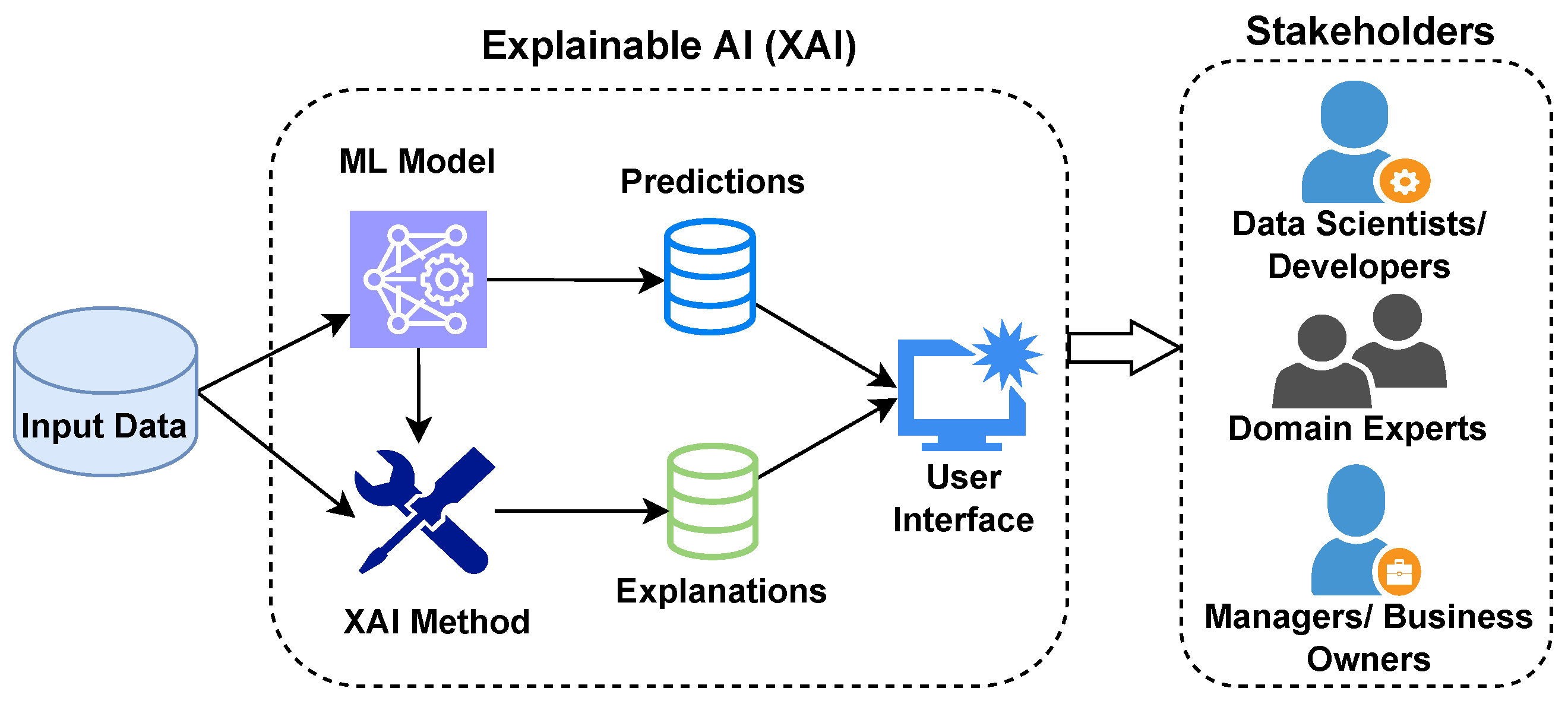
The Guardrail Architecture
A guardrail pattern places discrete, specialized models around your primary AI system to enforce safety and policy. Instead of relying on a single LLM to be both smart and safe, you decouple the responsibilities.
- Input Guardrails: Before a user prompt reaches the core model, it passes through lightweight classifiers to detect PII, malicious injection, or out-of-domain requests.
- The Core Model: The primary engine processes the safe request.
- Output Guardrails: The generated response is evaluated against safety policies (e.g., toxicity, hallucination checks) before being returned to the user.
Cloud providers offer managed infrastructure for this pattern. For instance, Google Cloud's Responsible AI tooling within Vertex AI provides pre-built safety filters and evaluation pipelines that map well to this guardrail topology.
Human-in-the-Loop (HITL) Escalation
For high-risk workflow automation, the architecture must support confidence scoring. If a predictive model's confidence falls below a set threshold, or an LLM's grounding score is weak, the system automatically routes the task to a human operator. The UI presented to the operator must surface the XAI data (e.g., the SHAP values or the RAG citations) so the human can make a fast, informed decision.
Shadow Deployments
Before relying on AI for critical paths, deploy the model in shadow mode. It receives production data and generates predictions and explanations, but these outputs are only logged, not acted upon. Engineering teams use this phase to measure whether the post-hoc explanations align with human domain expertise.
Use Cases and Contextual Fit
Evaluating the fit for different XAI techniques requires understanding the business context and the cost of failure.
- Automated Credit and Underwriting: Operating in heavily regulated environments, financial institutions must provide clear adverse action notices. Black-box models are a severe liability here. Teams often default to inherently interpretable models or use rigorous, heavily monitored SHAP pipelines to ensure every declined application has a mathematically sound, documented reason.
- AI Agents for Customer Support: When an agent answers a technical support query, the risk is not regulatory, but brand trust. Post-hoc mathematical explanations are useless to a consumer. The right fit is an LLM grounded via RAG, where the agent provides a direct link to the internal knowledge base article it used to generate the answer.
- Medical Diagnostics Support: A computer vision model identifying anomalies in X-rays cannot operate as a black box. Clinicians need to know *where* the model is looking. Saliency maps (visual explanations highlighting the pixels that drove the prediction) are non-negotiable requirements for solution design in this space.
Trade-offs, Risks, and Constraints
Designing for explainability introduces hard constraints. Leadership must weigh these trade-offs early in the solution design phase.
The Latency and Compute Tax
Post-hoc explainability is computationally expensive. Running a complex XGBoost model takes milliseconds; generating SHAP values for that exact prediction might take 10x to 100x longer depending on the dataset. In real-time bidding or high-frequency trading, this latency is a dealbreaker. Teams must decide whether to calculate explanations asynchronously (logging them for later audit) or synchronously (delaying the user experience).
The Hallucinated Explanation Trap
A massive risk in Generative AI is asking an LLM to "explain its reasoning." LLMs are fundamentally next-token predictors. If you prompt an LLM with "Why did you make that decision?", it will generate a plausible-sounding rationale that aligns with the prompt, but this is a post-hoc rationalization, not a factual readout of its internal state. Never rely on an LLM's self-explanation as an audit trail. Grounding and external monitoring are required.
The Accuracy vs. Interpretability Tension
Historically, there was a strict trade-off: simpler models were transparent but less accurate, while deep neural networks were highly accurate but opaque. While techniques like SHAP have bridged this gap, the tension remains in system maintenance. A highly complex model with an XAI wrapper requires maintaining two pipelines (the model and the explainer), increasing the surface area for technical debt.
Decision Criteria: Structuring Your Approach
When standardizing your organization's approach to AI, rely on risk tiering to dictate your architectural choices. The widely adopted NIST AI Risk Management Framework provides an excellent baseline for mapping these tiers.
- Low Risk (Internal productivity, draft generation): Focus on basic telemetry and feedback loops. Complex XAI is overkill. Rely on simple system prompts and user upvote/downvote metrics for continuous improvement.
- Medium Risk (Customer-facing chatbots, internal analytics): Require provenance. Implement RAG with strict citation requirements. Use output guardrails to monitor for toxicity and brand safety.
- High Risk (Healthcare, finance, automated access control): Mandate inherent interpretability or formal feature attribution (SHAP). Implement mandatory Human-in-the-Loop workflows for low-confidence predictions. Establish clear ownership for regular bias and fairness auditing.
Common Pitfalls and How Serious Teams Avoid Them
Implementing RAI and XAI is often derailed by organizational friction rather than technical limitations.
Treating RAI as an Afterthought - The most common failure mode is building a model, testing its accuracy, and then asking the security or compliance team to "make it safe." Safety and explainability must be defined in the initial requirements. Guardrail latency and RAG chunking strategies must be part of the initial architecture, not a pre-launch bolt-on.
Confusing Correlation with Causation in XAI - Feature attribution methods like SHAP tell you what the model learned, not how the real world works. If a model flags zip codes as a primary predictor for loan defaults, it has identified a correlation (often masking demographic bias). Engineers must avoid presenting SHAP values to business stakeholders as causal business insights. They are purely model debugging tools.
Lack of Clear Ownership - Who owns the guardrails? If an AI agent generates a toxic response, is it the data science team's fault for model training, the platform engineering team's fault for the guardrail failure, or the product team's fault for prompt design? Serious engineering cultures define clear ownership of the telemetry and safety thresholds before the first line of code is written.
Takeaways
- Define the 'Why' Early: Identify whether your system requires explainability for regulatory compliance, internal debugging, or end-user trust. The audience dictates the technique.
- Match the Tool to the Model: Use SHAP and LIME for predictive tabular models; rely on RAG, citations, and input/output guardrails for Generative AI and agent workflows.
- Budget for the Overhead: XAI introduces computational and latency costs. Plan for asynchronous explanation generation if real-time constraints are tight.
- Separate Intelligence from Safety: Adopt a guardrail architecture. Do not rely on a single model to act as both the reasoning engine and the safety enforcer.
- Establish Clear Ownership: Treat Responsible AI as a continuous engineering constraint, not a one-time compliance checklist. Ensure a specific team owns the telemetry and escalation pathways.
Join the newsletter
Enjoyed this article? Get more like it in your inbox every week.
* 200+ tech professionals already in.
Next read
28 Jul 2026
5 Architectural Strategies to Unlock AI’s Full Potential
Move beyond prototype LLMs. Discover five architectural strategies to build reliable, grounded, and measurable AI systems that deliver real business value for the enterprise.
20 Jul 2026
Engineering an Agentic Workforce: Using Google Workspace
Examine how enterprises use Google Workspace and Vertex AI to shift from basic generative chat to secure, multi-step agentic workflows that drive measurable improvement.
6 Jul 2026
Multi-Agent Ecosystems: Architectural Patterns for Engineering Leaders
Move beyond single-prompt limitations. Understand multi-agent architectures, communication protocols, and the trade-offs of building agent-to-agent systems in production.