2 Jun 2026
How to Test AI Agents and Build Resilient Deployments
 Reviewed byAzjargal Gankhuyag· AI Agent Engineer | Solution Architect
Moving AI agents from prototype to production requires shifting from manual testing to programmatic evaluations and building defensive architectures against non-deterministic failures.
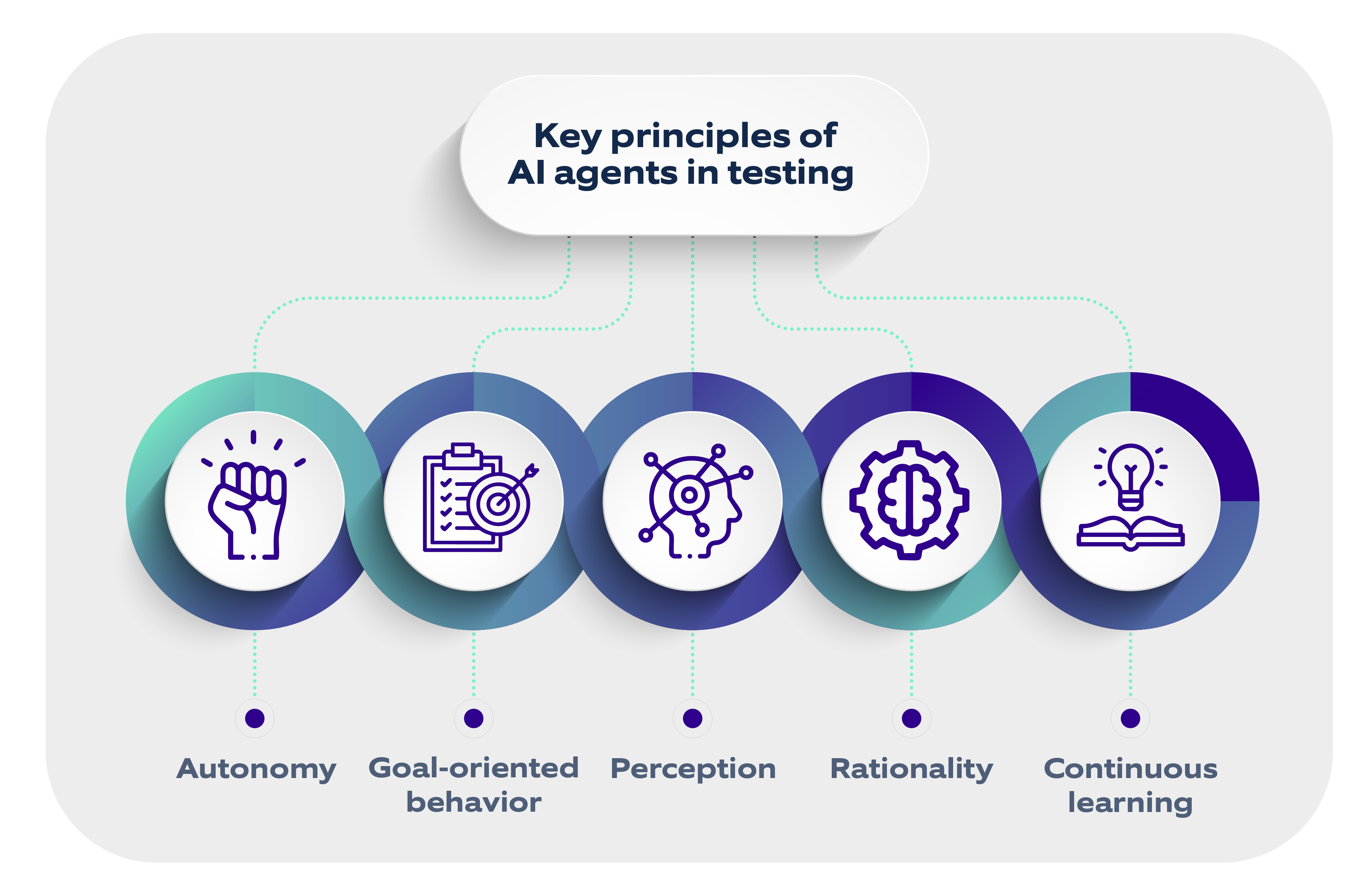
Building an AI agent is fundamentally different from building standard software. Traditional applications follow strict execution paths: a given input reliably produces a predictable output. AI agents, however, operate on probabilistic reasoning. They interpret intent, formulate plans, select tools, and adapt to the responses they receive from external systems.
For CTOs and senior engineering leads, this shift breaks standard CI/CD paradigms. You can no longer rely purely on unit tests and code coverage. An agent might have perfectly written Python code for its API tools, but still fail in production because the underlying language model hallucinates a parameter, misinterprets a user prompt, or gets stuck in an infinite reasoning loop.
This article outlines the practical implementation of agent testing and resilient architecture. By the end, you will understand how to structure evaluation pipelines for non-deterministic systems, what architectural patterns prevent catastrophic agent failures, and how to define deployment criteria that balance speed with safety.
Core Mechanics: Where AI Agents Break
To test an agent effectively, you must understand how it fails. Most modern agents use a loop-based architecture often a variation of Reason, Act, and Observe. The agent receives a task, reasons about what to do next, calls an external tool, observes the result, and decides if the task is complete.

Failures in this loop compound rapidly:
- Planning drift: The agent starts with a correct plan but forgets the original goal after three or four tool executions.
- Tool selection errors: The agent chooses the wrong tool for the job (e.g., calling a user-deletion API instead of a user-lookup API).
- Parameter formatting failures: The agent selects the right tool but passes arguments in the wrong format (e.g., providing a natural language date instead of an ISO 8601 timestamp).
- Infinite loops: The agent receives an unexpected error from an API, fails to understand the error message, and repeatedly tries the exact same action until it hits a token limit.
Traditional testing catches none of these. A unit test for a weather API tool only proves the API works when given correct coordinates; it does not prove the agent will know how to extract those coordinates from a messy user query.
Testing Architectures and Patterns
Testing an AI agent requires a multi-layered approach. You must separate the deterministic components (your code) from the probabilistic components (the model's reasoning).
1. Deterministic Component Testing
Before testing the AI, test the tools. Your agent's capabilities are only as reliable as the APIs it calls. Treat tool execution as standard software engineering.
- Write unit tests for every tool function using mocked API responses.
- Ensure tools gracefully handle malformed inputs and return descriptive error messages. (An error message like `"HTTP 500"` is useless to an agent. An error like `"Error: Date parameter must be YYYY-MM-DD"` allows the agent to self-correct).
- Validate system prompts and orchestrator configurations for syntax errors.
2. Evaluation Datasets (Golden Sets)
To measure improvement over time, you need a baseline. A "golden dataset" is a curated list of inputs mapped to expected outcomes. For agents, you need to track both the final answer and the intermediate steps.
For example, if the user asks, "Refund the last transaction for user 123," your golden set should expect the agent to:
- Call `lookup_user(123)`
- Call `get_recent_transactions(user_id)`
- Call `issue_refund(transaction_id)`
- Return a confirmation message.
3. LLM-as-a-Judge and Trajectory Evaluation
Because agents generate varied natural language, exact-match string testing rarely works. Instead, engineering teams use stronger models (like GPT-5 or Gemini 3.1 Pro) to evaluate the agent's output against a strict rubric. For foundational approaches to this, review Anthropic's guide to evaluating agents.
Trajectory evaluation focuses on the path the agent took. The evaluator model looks at the execution trace and scores it on:
- Efficiency: Did the agent solve the problem in the minimum necessary steps?
- Tool accuracy: Were all tool calls necessary and correctly formatted?
- Safety adherence: Did the agent attempt any forbidden actions?
Designing for Resilience in Production
Testing proves your agent works in theory; resilient architecture ensures it survives reality. When deploying workflow automation or AI agents to production, you must build defensive mechanisms to contain the blast radius of inevitable model failures.
Bounded Execution and Circuit Breakers
Never allow an agent to loop indefinitely. Establish hard limits on execution depth.
- Max iterations: Cap the reasoning loop at a strict number (e.g., 5 or 10 steps). If the agent hasn't reached a conclusion, force it to pause and ask for human clarification.
- Timeouts: Enforce strict timeouts on tool execution and LLM generation.
- Circuit breakers: If an external API starts failing, the agent will repeatedly fail to execute its plan. Implement circuit breakers that temporarily disable specific tools and instruct the agent to use alternative methods or inform the user of the outage.
Strict Output Parsing and Typed Schemas
Do not rely on the agent to output raw JSON strings reliably. Enforce strict schema constraints at the API level. Modern platforms allow you to pass a JSON schema to the model, forcing its output to match your required data structure. If the output fails schema validation, intercept it before it hits your application logic, and pass the validation error back to the agent for correction.
Graceful Degradation and Fallback Routing
If an agent fails to complete a complex reasoning task, the system should not simply crash. Implement fallback routing. If the primary agent model fails repeatedly, route the query to a simpler, rule-based system or escalate it to a human operator. Providing a clean hand-off with the full context of the agent's failed attempts is crucial for reliable delivery.
The Human-in-the-Loop (HITL) Boundary
For operations that mutate data, move money, or alter critical infrastructure, autonomous execution is an unnecessary risk. Implement an explicit HITL boundary. The agent can perform all the research, formulate a plan, and prepare the API payload, but the final execution requires a human click. This pattern delivers 90% of the efficiency gains with near-zero catastrophic risk.
Practical Use Cases and Context
To judge the fit of these resilience patterns, consider two distinct operational contexts:
Internal IT Helpdesk Agent (Low Risk, High Volume)
- Goal: Reset passwords, provision software licenses, answer policy questions.
- Testing focus: High coverage of tool schemas and trajectory evaluation for retrieval accuracy.
- Resilience model: Fully autonomous for read-only actions (checking policies). For write actions (provisioning licenses), the agent drafts the ticket and pings an IT admin in Slack for a single-click approval.
Customer-Facing Financial Assistant (High Risk, Variable Volume)
- Goal: Answer account queries, summarize spending, initiate transfers.
- Testing focus: Strict LLM-as-a-judge evaluation for safety, prompt injection vulnerabilities, and factual faithfulness.
- Resilience model: Strict bounded execution. Any API failure immediately routes the user to a human agent. The agent operates with read-only database permissions; it cannot execute transfers natively, only stage them in a secure portal for user confirmation.
Trade-offs and Constraints
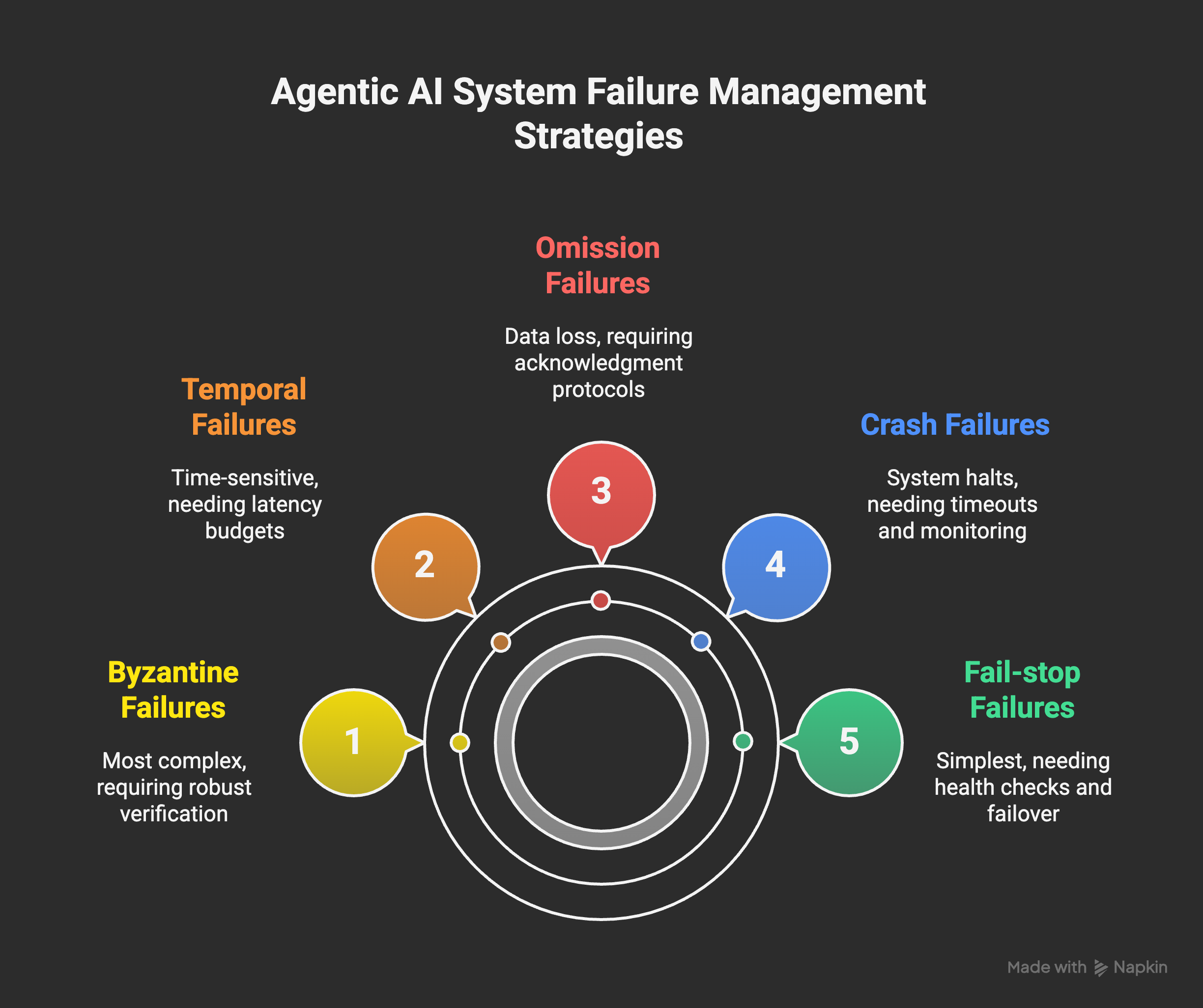
Deploying robust agent infrastructure requires navigating specific trade-offs:
- Evaluation Cost vs. Deployment Confidence: Running rigorous LLM-as-a-judge pipelines on every pull request is expensive. You pay for the execution of the agent, the tools, and the evaluator model. Teams must balance daily cost against the risk of shipping a regression.
- Autonomy vs. Latency: Giving an agent self-reflection capabilities (asking it to review its own work before responding) significantly improves accuracy but doubles or triples response latency. For background workflow automation, this is fine; for real-time chat, it ruins the user experience.
- Model Lock-in vs. Optimization: Optimizing system prompts and tool descriptions for a specific model (e.g., formatting specifically for Gemini's tool use) makes the agent highly reliable, but creates switching costs if you want to migrate to an open-source model later. Refer to Google Cloud's generative AI architecture patterns for strategies on abstracting model access.
Decision Criteria for Production Readiness
Before routing production traffic to an AI agent, evaluate your system against these concrete criteria:
- Observability baseline: Are all LLM calls, tool executions, and latency metrics tracked in a central tracing system? Can you reconstruct the exact reasoning path of a failed transaction?
- Deterministic guardrails: Are system prompts and database credentials isolated from user input?
- Failure isolation: If the LLM goes down, or an external tool API changes its schema, does the agent fail safely, or does it corrupt downstream data?
- Evaluation coverage: Do you have a golden dataset covering at least 50 core user intents, and does your CI/CD pipeline test against it automatically?
- Loop limits: Is there a hard-coded maximum on the number of iterations the agent can perform per session?
Common Pitfalls
Engineering teams transitioning to agent architectures frequently make the same mistakes:
- Relying on "Vibe Checks": Developers manually chat with the agent for ten minutes, verify it works for a few common queries, and deploy it. This fails to account for edge cases and prompt drift over time.
- Over-permissioning Tools: Giving an agent a generic `execute_sql` tool is a massive security risk. Agents should only have access to narrow, purpose-built APIs with strict input validation.
- Ignoring Observability: Treating the agent as a black box. Without detailed telemetry capturing the exact prompts sent and responses received, debugging a production failure is impossible.
- Hiding Errors from the Agent: Catching tool errors and returning empty strings to the agent confuses the model. Agents need explicit, verbose error messages to correct their behavior.
Takeaways
- Test the tools deterministically; evaluate the agent probabilistically. Ensure your APIs handle bad inputs cleanly before attaching an LLM to them.
- Implement LLM-as-a-judge frameworks to automate the grading of agent trajectories. Focus on tool selection accuracy and plan adherence, not just the final text output.
- Enforce strict architectural boundaries: cap iteration loops, utilize JSON schemas for output formatting, and build circuit breakers for failing APIs.
- Establish clear human-in-the-loop workflows for high-stakes actions. Treat the agent as an orchestrator that prepares work for human approval, rather than an autonomous actor with unrestricted write access.
- Continuous improvement requires deep observability. Log every step of the agent's reasoning loop so you can refine your golden datasets based on real-world failures.
Join the newsletter
Enjoyed this article? Get more like it in your inbox every week.
* 200+ tech professionals already in.
Next read
28 Jul 2026
5 Architectural Strategies to Unlock AI’s Full Potential
Move beyond prototype LLMs. Discover five architectural strategies to build reliable, grounded, and measurable AI systems that deliver real business value for the enterprise.
20 Jul 2026
Engineering an Agentic Workforce: Using Google Workspace
Examine how enterprises use Google Workspace and Vertex AI to shift from basic generative chat to secure, multi-step agentic workflows that drive measurable improvement.
13 Jul 2026
Responsible and Explainable AI: A Practical Guide for Engineering Leaders
Move beyond compliance. Learn how to architect AI systems that balance model performance with transparency, safety, and operational governance for reliable delivery.