11 May 2026
7 Architectural Shifts from Google Cloud Next 2026: A Guide for Engineering Leaders
 Reviewed byAzjargal Gankhuyag· AI Agent Engineer | Solution Architect
Analyze the core technical highlights from Google Cloud Next 2026, focusing on AI agent implementation, unified data layers, and infrastructure trade-offs for senior engineering.
The era of the proof-of-concept AI wrapper is officially over. Coming out of Google Cloud Next 2026, the focus has strictly shifted from isolated generative AI models to reliable delivery, structured agentic workflows, and measurable workflow automation. For CTOs, founders, and senior engineering leads, the event signals a maturation of the cloud ecosystem where artificial intelligence is no longer treated as a separate, unpredictable layer, but as a core component of standard infrastructure.
This analysis breaks down the seven structural highlights from the event. It clarifies what these shifts mean for your architecture, how they impact your compute and data strategies, and what you need to understand to make grounded decisions regarding custom software and AI agent implementation in the coming year.
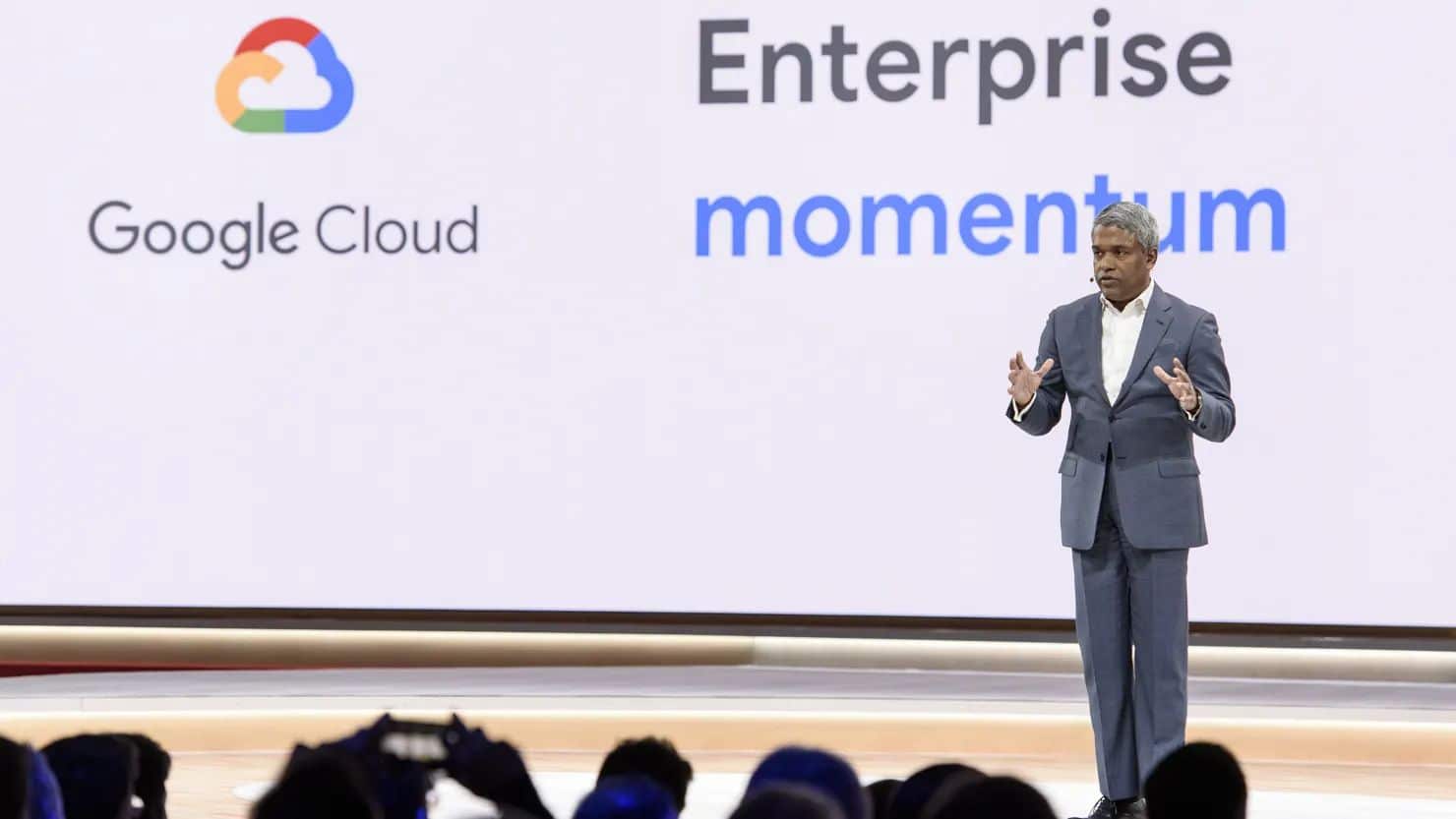
1. Framing the 2026 Landscape
For engineering leadership, the announcements at Google Cloud Next 2026 affect three immediate decision areas:
- Compute Allocation: Deciding between dedicated hardware (GPUs/TPUs) versus serverless abstraction for AI inference.
- Data Consolidation: Eliminating standalone vector databases in favor of unified transactional and analytical stores.
- Security and Governance: Enforcing Identity and Access Management (IAM) not just on the database, but down to the specific context window of an AI prompt.
Understanding these themes helps teams avoid building bespoke, unmaintainable orchestration layers and instead leverage native cloud primitives for measured improvement in operational efficiency.
2. The 7 Core Technical Highlights
1. Managed Agentic Orchestration in Vertex AI
The shift from stateless LLM calls to long-running, stateful agent execution is the most significant architectural change. Vertex AI has evolved to handle the execution topology of multi-agent systems natively. Instead of relying on brittle, custom-built Python loops, engineering teams can now deploy agents with defined constraints, memory retention, and native tool-calling capabilities.
How it works: Vertex AI manages the state machine. When an agent decides it needs to query an external API or run a BigQuery job, the platform pauses the agent, securely executes the tool, and injects the payload back into the agent's context. This shifts the burden of error handling and retry logic from your application code to the managed platform.

2. Spanner and BigQuery: The Unified Vector-Transactional Layer
Managing separate infrastructure for transactional data, analytical data, and vector embeddings creates severe synchronization risks. The 2026 highlight is the complete convergence of these layers. Cloud Spanner now handles real-time vector indexing with strong consistency guarantees alongside traditional relational queries.
How it works: You insert a record into Spanner. The platform automatically generates the embedding via a hidden Vertex AI integration and indexes it. Your applications can execute a SQL query that filters by tenant ID (exact match) and sorts by semantic similarity (vector distance) in a single, ACID-compliant transaction.
3. Stateful Cloud Run for AI Workloads
Cloud Run has traditionally been optimized for stateless, web-triggered containers. However, AI agent implementation often requires long-running, asynchronous processes. The platform now officially supports extended execution times and native stateful sidecars tailored for agent memory.
How it works: A multi-container deployment allows your primary application to handle HTTP requests while a sidecar container manages the persistent connection to the LLM and maintains short-term conversational memory. This prevents cold starts from breaking active agent reasoning loops.
4. Dynamic Compute Routing (TPU and GPU Tiering)
Predicting the exact hardware requirements for AI workloads leads to massive over-provisioning. Google Cloud introduced dynamic compute routing, allowing teams to set cost-latency thresholds rather than hardcoding instance types.
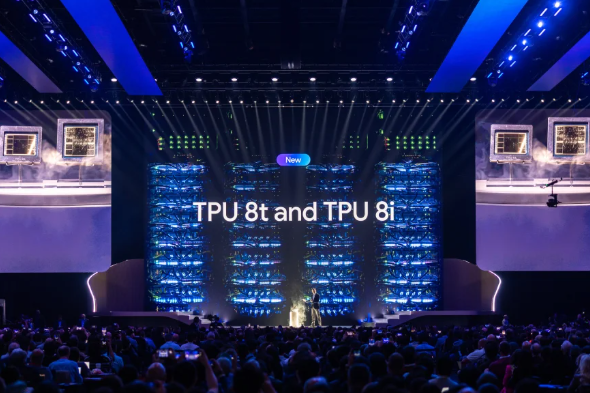
How it works: You define a policy: `Maximum latency: 800ms, Maximum cost per 1M tokens: $0.50`. The infrastructure dynamically routes the inference request to the most efficient available silicon—whether that is a standard GPU, a next-generation TPU, or a CPU-based quantization model—based on real-time cluster availability.
5. Deterministic RAG and Data Grounding
Retrieval-Augmented Generation (RAG) is notoriously difficult to debug. Google has formalized RAG into a managed pipeline with clear observability. The focus is on hybrid search architectures that combine dense vector retrieval with sparse keyword indexing to guarantee deterministic retrieval of critical documents.
How it works: Instead of manually chunking documents and pushing them to an index, you define a Google Cloud Storage bucket as a managed corpus. The platform handles the parsing, chunking, embedding, and continuous synchronization, exposing a single secure retrieval endpoint.
6. Prompt-Level IAM and Identity-Aware AI
The most pressing security gap in generative AI has been the bypass of traditional access controls. The new security paradigm extends Google Cloud IAM directly into the prompt context.
How it works: If an AI agent attempts to query a dataset to answer a user's prompt, the agent inherits the exact IAM permissions of the calling user. If the user does not have permission to view a specific column in BigQuery, the agent cannot access it, and the data is fundamentally excluded from the model's context window.
7. FinOps for Token and Agent Tracing
LLM API calls are a variable cost that can spiral out of control in automated workflows. Standard cloud billing previously lacked the granularity to track costs back to specific agent behaviors.
How it works: Cloud Billing is now deeply integrated with Vertex AI telemetry. You can view cost dashboards broken down not just by project or service, but by specific agent, tool, or even prompt template. This allows teams to identify exactly which automated workflow is driving compute costs.
3. Architectures and Operating Models
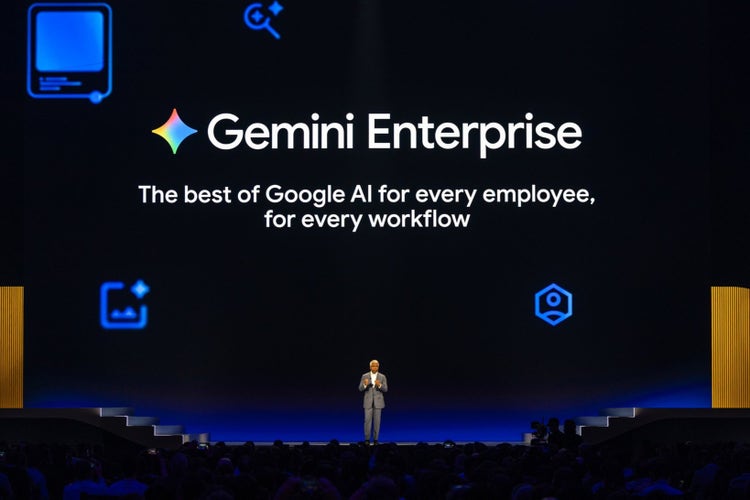
Adopting these new highlights requires a shift in solution design. The traditional microservices architecture is evolving into a hybrid agent-services model.
In a standard microservice environment, service A calls service B via a strict API contract. In an agent-service architecture, workflows are non-deterministic. An orchestration layer acts as a router, evaluating a user request and delegating it to specialized, smaller models (e.g., Gemini Flash) for fast, structured data extraction, while routing complex reasoning tasks to larger models (e.g., Gemini Pro).
For practical implementation, teams should adopt a hub-and-spoke orchestration model. A central, managed orchestrator in Vertex AI handles user intent and routing (the hub), while individual Cloud Run services execute specific, tightly-scoped backend tools (the spokes). This isolates the unpredictability of the LLM from the deterministic logic of your core business systems.
4. Use Cases and Context
These architectural shifts are highly applicable to specific operational workflows:
- Automated Compliance Auditing: Using stateful Cloud Run and Vertex agents to ingest thousands of PDF contracts from Cloud Storage, extract specific liability clauses, cross-reference them against internal policy documents using Spanner vector search, and flag discrepancies for human review.
- Tier-1 Support Resolution: Replacing decision-tree chatbots with IAM-aware agents. The agent securely queries a customer's specific account history and executes a refund via a deterministic internal API, all constrained by the user's explicit permissions.
- Internal Developer Portals: Allowing engineers to query system architecture naturally. The agent retrieves exact documentation via managed RAG and drafts infrastructure-as-code templates, constrained by cost policies enforced through dynamic compute routing.
5. Trade-offs, Risks, and Constraints
While the managed services announced at Next 2026 promise faster time-to-market, they introduce specific trade-offs that engineering leadership must validate.
Lock-in vs. Velocity: Relying heavily on Vertex AI's native agent orchestrator ties your workflow logic closely to Google Cloud's ecosystem. If you require multi-cloud portability, building a custom orchestrator on Kubernetes might be necessary, though it comes at the cost of significantly higher maintenance overhead.
Latency in Agent Loops: Native tool calling is powerful but slow. Every time an agent decides to use a tool, it requires a round-trip to the LLM. If an agent loops three times to resolve an issue, a 2-second inference latency balloons to a 6-second user wait time. For real-time applications, you must design for asynchronous background processing rather than synchronous blocking calls.
Cost of Unified Data: While Spanner's integration of vector and transactional data is elegant, running vector search on premium transactional databases is fundamentally more expensive than using a dedicated open-source vector store. You must weigh the operational simplicity against the raw infrastructure cost.
6. Concrete Decision Criteria
When designing your next system, use these criteria to decide between legacy patterns and the new 2026 architectures:
- State Management: If your AI interaction is a single prompt-and-response, use a standard stateless API call. If the system requires multi-step reasoning, memory, and tool execution, adopt managed agentic orchestration.
- Data Synchronization: If your vector embeddings are generated once a month from static documents, a standalone vector database is sufficient. If your embeddings must update in real-time alongside transactional state changes (e.g., e-commerce inventory), adopt Spanner with vector search.
- Workload Duration: If your inference or processing takes under 60 seconds, use standard Cloud Run. If your agent involves long, variable reasoning loops that require background processing and persistent memory, transition to stateful sidecar patterns.
- Hardware Needs: If you are training custom models from scratch, provision dedicated TPUs. If you are purely running inference or relying on foundational models, utilize dynamic compute routing to optimize for cost.
7. Common Pitfalls and How to Avoid Them
The most frequent cause of failure in AI agent implementation is treating non-deterministic models like deterministic functions. Serious engineering teams avoid the following traps:
- Over-engineering Custom RAG: Many teams spend months building custom chunking and retrieval pipelines using fragile open-source libraries. Review the Google Cloud architecture center for baseline managed RAG patterns before writing custom retrieval code.
- Failing to Constrain the Agent: Granting an agent broad access to APIs without strict boundary conditions leads to infinite reasoning loops and massive token costs. Always enforce strict retry limits, define clear exit criteria, and implement prompt-level IAM.
- Ignoring Observability: Deploying an agent without token telemetry is equivalent to deploying a database without monitoring CPU usage. Ensure FinOps integration is enabled on day one so you have clear ownership of variable API costs.
8. Takeaways
- The focus of cloud architecture has moved from experimenting with generative AI to implementing reliable, stateful agentic workflows that drive measured improvement.
- Vertex AI is now a comprehensive orchestration layer, handling state, memory, and tool execution natively, reducing the need for custom orchestration code.
- Database architectures are converging; operational and vector data can now live in the same ACID-compliant layer, removing the need for fragile ETL synchronization pipelines.
- Security must be applied at the prompt level. AI agents should strictly inherit the IAM permissions of the human user to prevent unauthorized data access.
- Hardware provisioning is becoming dynamic. Shift from hardcoding infrastructure choices to defining cost and latency tolerances, allowing the cloud provider to route workloads efficiently.
- Success in this new landscape requires clear ownership of agent behavior, rigorous attention to variable token costs, and a commitment to practical implementation over architectural hype.
Join the newsletter
Enjoyed this article? Get more like it in your inbox every week.
* 200+ tech professionals already in.
Next read
28 Jul 2026
5 Architectural Strategies to Unlock AI’s Full Potential
Move beyond prototype LLMs. Discover five architectural strategies to build reliable, grounded, and measurable AI systems that deliver real business value for the enterprise.
20 Jul 2026
Engineering an Agentic Workforce: Using Google Workspace
Examine how enterprises use Google Workspace and Vertex AI to shift from basic generative chat to secure, multi-step agentic workflows that drive measurable improvement.
13 Jul 2026
Responsible and Explainable AI: A Practical Guide for Engineering Leaders
Move beyond compliance. Learn how to architect AI systems that balance model performance with transparency, safety, and operational governance for reliable delivery.